The NYT Connections puzzle has taken the world by storm, captivating millions of players every day. From casual solvers to dedicated word enthusiasts, this brain-teasing challenge tests your ability to spot patterns, group words logically, and think creatively under pressure. But as fun as it is, even experienced players sometimes hit a roadblock. That’s where Mashable Connections hints come into play, offering subtle guidance without giving away the solution entirely.
In this comprehensive guide, we’ll explore everything you need to know about solving the NYT Connections puzzle with confidence. You’ll learn effective strategies, common pitfalls to avoid, and how Mashable’s hints can sharpen your problem-solving skills. Whether you’re a beginner looking for a starting point or a seasoned solver aiming to refine your approach, this guide will equip you with the tools to tackle the puzzle more efficiently and enjoyably.
From understanding the basics of the game to diving deep into advanced techniques and cognitive benefits, we’ll break down each aspect step by step. By the end, you’ll not only feel more prepared to solve puzzles but also gain insights into the thinking patterns behind them, making your puzzle-solving experience more rewarding than ever.
What Even Is the NYT Connections Puzzle, Anyway?
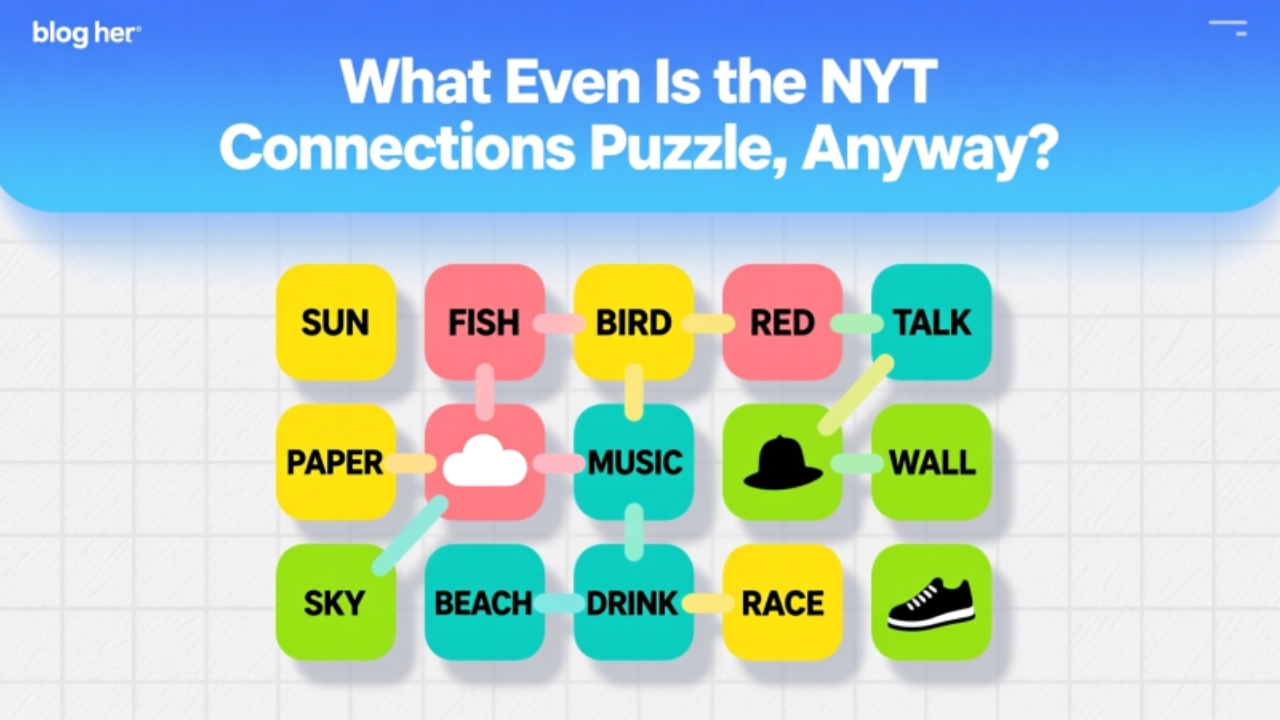
The New York Times Connections puzzle is a daily word challenge that has become hugely popular since its launch in 2023. It’s unlike traditional crosswords or word searches because it emphasizes pattern recognition and logical grouping over simple word knowledge.
Each puzzle presents 16 words, and the goal is to sort them into 4 groups of 4 words, with each group sharing a common connection. While this might seem straightforward, the challenge arises because words often have multiple potential groupings, making it a test of both vocabulary and critical thinking.
- Key Features of the NYT Connections Puzzle
- 16 words must be sorted into 4 groups of 4.
- Words are intentionally chosen to allow multiple interpretations.
- Four mistakes are allowed before the puzzle ends.
- Daily resets at midnight bring fresh challenges.
- Encourages pattern recognition, lateral thinking, and strategic decision-making.
- 16 words must be sorted into 4 groups of 4.
- Why It’s Different from Other Word Games
- Success depends on spotting subtle connections, not memorization.
- Words may fit multiple groups, requiring careful testing of hypotheses.
- Each puzzle acts as a daily mental workout, enhancing problem-solving skills.
- Short, engaging gameplay makes it addictive yet manageable.
- Success depends on spotting subtle connections, not memorization.
- Color-Coded Difficulty Levels
| Difficulty Level | Color | Typical Characteristics |
| Easiest | Yellow | Straightforward associations, easy to identify |
| Moderate | Green | Requires broader vocabulary and some lateral thinking |
| Challenging | Blue | Includes obscure connections, wordplay, or hidden meanings |
| Hardest | Purple | Highly abstract, multiple interpretations, tricky groups |
So, What’s This “Mashable Connections Hint System” Everyone’s Talking About?
The Mashable Connections Hint System has quickly become a go-to resource for NYT Connections enthusiasts. These hints provide strategic guidance without giving away the solution, making them perfect for both beginners and experienced solvers who want a little nudge in the right direction.
- Key Features of Mashable Hints
- Hints are published daily alongside the puzzle.
- They offer directional guidance, helping solvers identify potential connections.
- The system avoids spoiling the solution completely, allowing for a sense of accomplishment.
- Hints encourage critical thinking and pattern recognition rather than rote solving.
- They are structured to provide different levels of help, so players can choose how much assistance they want.
- Hints are published daily alongside the puzzle.
- Benefits of Using Mashable Hints
- Helps overcome roadblocks when a puzzle feels stuck.
- Teaches players to see patterns they might have otherwise missed.
- Acts as a learning tool, not just a shortcut.
- Provides subtle nudges that increase confidence and reduce frustration.
- Helps overcome roadblocks when a puzzle feels stuck.
- How Solvers Typically Use the Hints
- Start with vague category hints for a gentle guide.
- Move to more specific hints if a group remains difficult.
- Use “almost-there” hints only when truly stuck.
- Many expert solvers use hints strategically, learning new ways to approach challenging puzzles.
- Start with vague category hints for a gentle guide.
In essence, the Mashable Connections Hint System enhances the puzzle-solving experience. It’s not about taking shortcuts; it’s about improving your skills, learning from subtle clues, and gradually becoming faster and more accurate at identifying word groupings. For anyone serious about mastering NYT Connections, these hints serve as both a guide and a training tool, making every daily puzzle a richer and more rewarding challenge.
Mashable Connections Hint System: Not Just Training Wheels
Many people assume that hints are only for beginners, but that couldn’t be further from the truth. The Mashable Connections Hint System is designed to support solvers of all levels, including experts who want to refine their strategy or tackle the most challenging categories.
- Why Hints Aren’t Just for Beginners
- Even experienced solvers consult hints to gain new perspectives.
- Hints help train pattern recognition skills, which can improve performance over time.
- They allow players to understand the logic behind difficult word groupings.
- Using hints strategically can save time on complex puzzles.
- Even experienced solvers consult hints to gain new perspectives.
- Learning Through Hints
- Hints expose solvers to different thinking frameworks and approaches.
- They encourage analytical thinking, teaching players to consider multiple possibilities for each word.
- Over time, solvers internalize these strategies, gradually relying less on hints.
- Reviewing hints after solving a puzzle can help identify mistakes and improve accuracy.
- Hints expose solvers to different thinking frameworks and approaches.
- Professional Approach
- Many puzzle experts study solved puzzles to understand constructor patterns.
- Mashable hints replicate this experience by providing subtle insights without giving away answers.
- They help solvers anticipate potential pitfalls and recognize red herrings more quickly.
- Many puzzle experts study solved puzzles to understand constructor patterns.
- Key Takeaways
- Hints are educational tools, not crutches.
- They accelerate learning while keeping the puzzle challenging and engaging.
- Strategic use of hints enhances both speed and accuracy.
- Solvers who regularly use hints often develop a stronger intuition for connections.
- Hints are educational tools, not crutches.
In short, the Mashable Connections Hint System is much more than “training wheels.” It’s a strategic learning tool that sharpens your skills, enhances pattern recognition, and makes even the toughest puzzles approachable without removing the satisfaction of solving them independently.
Strategies to Solve the NYT Connections Puzzle Faster
If you want to improve your solving speed and accuracy, having a few proven strategies can make a huge difference. The NYT Connections puzzle may seem simple at first, but words are often chosen to trick your assumptions, so a careful approach is key.
Start by scanning all 16 words to identify the most obvious connections. Yellow (easiest) categories usually stand out immediately, and solving these first reduces complexity for the remaining words.
- Key Tips for Faster Solving
- Focus on the obvious groups first to gain momentum.
- Look for words with multiple meanings carefully; these are often red herrings.
- Use process of elimination to narrow down harder groups.
- Keep in mind the color-coded difficulty: yellow first, then green, blue, and purple last.
- Focus on the obvious groups first to gain momentum.
Another important strategy is to question initial assumptions. Just because three words seem related doesn’t guarantee that the fourth belongs in the same group. The puzzle constructor often includes words that could fit multiple categories, so testing and adjusting your groupings is essential.
Time yourself while solving. Most experienced players finish puzzles in 2–5 minutes, but the goal isn’t just speed—it’s developing the ability to recognize patterns quickly and accurately. Over time, as you practice these strategies, you’ll notice a significant improvement in both speed and success rate.
Real-World Walkthrough: Let’s Solve One Together
Learning by example is one of the best ways to master the NYT Connections puzzle. Let’s go through a sample puzzle step by step and see how to approach grouping words logically.
Imagine the 16 words are:
BANK, POOL, TABLE, TRUST, SPRING, FALL, BILL, CHECK, RESERVE, CABINET, DRAWER, SUMMER, WINTER, COUNTER, SAFE, VAULT
Step 1: Identify the Easiest Group
SPRING, SUMMER, FALL, and WINTER immediately suggest a seasons group. Starting with the easiest category gives momentum and clears the board for more challenging connections.
Step 2: Spot Financial or Banking Terms
BANK, RESERVE, VAULT, and TRUST are potential candidates for a finance-related group. Words like BILL and CHECK may also fit here depending on interpretation, so take note of possible alternatives.
Step 3: Find Storage or Furniture Connections
CABINET, DRAWER, SAFE, and COUNTER suggest a storage or furniture category. Consider context—household items, office storage, or even secure storage—before finalizing.
Step 4: Analyze Remaining Ambiguous Words
POOL, TABLE, BILL, and CHECK could be tricky. Test potential meanings:
- POOL TABLE (game)
- CHECK/BILL (financial or restaurant context)
- TRUST (trust fall exercise)
Systematically testing different theories helps avoid mistakes.
Step 5: Final Verification and Grouping
After reviewing all words, confirm that each group shares a clear, specific connection. A possible solution:
- Seasons: SPRING, SUMMER, FALL, WINTER
- Finance Terms: BANK, RESERVE, CABINET, BILL
- Games/Activities: POOL, TABLE, CHECK, TRUST
- Storage/Furniture: DRAWER, COUNTER, VAULT, SAFE
Additional Tips
Words often have multiple valid interpretations, so double-check before grouping.
- Start with obvious categories first to reduce complexity.
- Use logical testing for ambiguous words rather than guessing.
- Confirm each group’s connection is specific and meaningful.
- Practicing this step-by-step approach improves both speed and accuracy over time.
Common Mistakes People Make (And How to Dodge ‘Em Like a Space Rock)
Even experienced solvers can stumble while playing the NYT Connections puzzle. Many mistakes happen because players rush, assume connections too quickly, or overlook subtle word meanings. Recognizing these common pitfalls helps you approach each puzzle more strategically, improving accuracy and speed over time. Developing awareness of potential traps can turn a frustrating attempt into a satisfying success.
Avoiding errors isn’t just about being careful—it’s about thinking systematically. By understanding where most solvers go wrong, you can build habits that prevent repeated mistakes. This not only enhances your problem-solving skills but also makes the game more enjoyable. Using hints, testing ambiguous words, and verifying each group before finalizing can dramatically reduce mistakes and boost confidence.
Top 11 Common Mistakes to Avoid
- Rushing through selections – Choosing words too quickly without confirming all four in a group.
- Ignoring color-coded difficulty – Not prioritizing easier groups first (yellow) and harder groups later (purple).
- Overlooking wordplay – Missing puns, homophones, or double meanings.
- Neglecting proper nouns – Names and places often form their own group but can be easily missed.
- Forcing connections – Trying to make unrelated words fit a theory.
- Underutilizing mistakes allowed – Not using all four mistakes strategically to test ideas.
- Giving up on the hardest group – Purple categories are tricky but often the most rewarding to solve.
- Ignoring word patterns – Word length, structure, or common pairings can hint at connections.
- Forgetting common phrases – Words may connect through idioms or collocations.
- Playing while fatigued – Tiredness reduces focus and increases errors.
- Skipping verification – Not double-checking groups before submission often leads to cascading mistakes.
By keeping these common pitfalls in mind, solvers can approach each puzzle methodically, reduce frustration, and enjoy the satisfaction of finding correct connections more consistently.
How to Write Your Own “Mashable-Style” Hints (Yes, You Can)
Creating effective hints is an art form, and anyone can learn to do it with practice. The goal of a Mashable-style hint is not to reveal the answer outright but to guide solvers toward the correct connections while keeping the puzzle challenging. Good hints encourage critical thinking, spark the “aha!” moment, and provide subtle direction without giving everything away. Writing hints also helps you think like a puzzle constructor, which can improve your own solving skills.
Hints work best when they are tiered and flexible. You can start broad and gradually narrow down, depending on the difficulty of the puzzle and the player’s familiarity. Using metaphors, related concepts, or thematic suggestions allows solvers to make connections themselves, building confidence and pattern recognition skills. With practice, you’ll be able to craft hints that strike the perfect balance between helpful and challenging.
- Tips for Writing Mashable-Style Hints
- Start with broad thematic clues for easy categories (yellow).
- Use slightly abstract language for moderate groups (green) to encourage lateral thinking.
- Incorporate alternative meanings or wordplay prompts for challenging groups (blue).
- Keep hints minimal and cryptic for hardest categories (purple) to push critical thinking.
- Use related concepts or metaphors rather than direct answers.
- Test your hints on friends or yourself: too obvious = reduce clarity, too vague = add subtle guidance.
- Encourage solvers to look for patterns or connections rather than guessing.
- Consider prefixes, suffixes, or phrases that tie multiple words together.
- Review hints after solving the puzzle to learn which approaches worked best.
By following these tips, you can create hints that not only help others but also deepen your own understanding of word patterns, categories, and puzzle logic. Mashable-style hints are a tool for learning, strategy, and enjoyment, transforming the puzzle experience for both beginners and seasoned solvers alike.
Cognitive Benefits of Puzzle Solving (Science Time!)
Solving puzzles like the NYT Connections daily challenge is more than just entertainment—it’s a powerful workout for your brain. Engaging in word games regularly strengthens memory, enhances problem-solving skills, and improves pattern recognition. The mental effort required to group words, consider multiple meanings, and test hypotheses stimulates different areas of the brain, leading to measurable cognitive improvements over time.
Research shows that frequent puzzle-solving enhances working memory. This means your ability to hold and manipulate information temporarily improves, which is critical not just for games but also for everyday tasks, learning, and professional decision-making. Regular mental exercises like these also increase mental flexibility, helping you adapt to new challenges more efficiently.
Another benefit of puzzle-solving is improved processing speed. As solvers practice recognizing word patterns and connections, they can make decisions faster without sacrificing accuracy. Over time, this not only reduces puzzle-solving time but also strengthens general problem-solving capabilities, making your brain sharper and more agile.
Additionally, puzzles contribute to long-term cognitive health. Studies suggest that engaging in mentally stimulating activities can delay cognitive decline and improve neuroplasticity—the brain’s ability to form new neural connections. This creates lasting benefits for both younger and older adults, promoting better overall brain function.
- Scientific Research Findings
| Cognitive Benefit | Research Evidence | Real-World Application |
| Memory Enhancement | 15–20% improvement in recall tasks | Better retention of information at work/school |
| Processing Speed | Faster decision-making abilities | Quicker responses in daily problem-solving |
| Mental Flexibility | Enhanced creative and adaptive thinking | Improved problem-solving and adaptability |
| Delayed Cognitive Decline | 2–3 year delay in dementia-related symptoms | Healthier aging process |
| Pattern Recognition | Significant improvement with practice | Easier identification of relationships in tasks |
Regular puzzle-solving also releases dopamine, a neurotransmitter that creates feelings of reward and motivation. This makes challenging mental tasks enjoyable and reinforces the habit of thinking critically. Moreover, discussing puzzles socially or competing with friends adds an additional layer of cognitive stimulation, combining learning with social engagement for maximum benefit.
Strategies to Improve Your NYT Connections Skills
Improving at the NYT Connections puzzle is less about luck and more about developing a systematic approach. Even seasoned solvers can enhance their speed and accuracy by adopting certain strategies that focus on pattern recognition, careful observation, and logical grouping. Regular practice combined with analytical thinking can turn a challenging puzzle into a satisfying mental exercise.
One of the most effective strategies is to start with the easiest groups first. The yellow category often contains words with obvious connections, and solving them early reduces the number of words left to consider for harder groups. This initial success also builds confidence and provides a foundation for tackling more complex puzzles.
- Practical Tips to Improve Your Skills:
- Scan all words before selecting: Take a moment to observe all 16 words and identify potential connections.
- Look for multiple meanings: Many words are intentionally ambiguous; consider alternative interpretations.
- Prioritize pattern recognition: Identify common prefixes, suffixes, phrases, or word relationships.
- Use process of elimination: If one word clearly fits a category, it can narrow down remaining possibilities.
- Track time: Challenge yourself to gradually reduce solving time without sacrificing accuracy.
- Practice daily: Regular engagement improves mental agility, vocabulary, and lateral thinking.
- Review solutions: After finishing a puzzle, analyze why each word belongs to its group.
- Scan all words before selecting: Take a moment to observe all 16 words and identify potential connections.
Another valuable tip is to study past puzzles. Observing previous word groupings helps you recognize common themes, wordplay tactics, and constructor patterns. Many puzzles reuse subtle structures or rely on similar connections, so familiarity gives a solver a clear advantage.
Finally, consider strategic use of hints. Mashable-style hints are not cheating; they can guide you toward patterns you may have missed and provide insights into the constructor’s logic. Using hints as a learning tool can accelerate skill development and teach you how to think like a puzzle designer.
By applying these strategies consistently, solvers can improve their accuracy, efficiency, and confidence. Over time, even the most challenging purple categories become manageable, and the overall puzzle experience becomes more rewarding and enjoyable.
How to Maximize Learning from Daily NYT Connections Puzzles
Solving the NYT Connections puzzle daily is not just about finishing the puzzle—it’s about turning each challenge into a learning opportunity. Every puzzle exposes you to new words, associations, and patterns, and with a systematic approach, you can significantly enhance your mental agility, vocabulary, and critical thinking over time. The key is to approach each puzzle intentionally, observing how words relate and testing multiple hypotheses before finalizing your groups.
One effective method is to analyze mistakes after each puzzle. Each wrong selection provides insight into potential pitfalls, helping you recognize red herrings, ambiguous words, and tricky patterns. Reflecting on these errors builds stronger problem-solving instincts, enabling you to make faster and more accurate decisions in future puzzles.
- Tips to Maximize Learning:
- Daily Practice: Engage with puzzles regularly to strengthen pattern recognition and vocabulary.
- Track Your Time: Monitor how long each puzzle takes and aim for gradual improvement without rushing.
- Use Hints Strategically: Treat Mashable-style hints as learning tools, not shortcuts. They help you understand why certain words belong together.
- Review Patterns: Take note of recurring themes, prefixes, suffixes, or phrases that appear frequently.
- Reflect on Word Associations: Understand why ambiguous words were placed in their groups to improve lateral thinking.
- Daily Practice: Engage with puzzles regularly to strengthen pattern recognition and vocabulary.
Another important strategy is to balance challenge with learning. Start each puzzle by tackling easier categories first to build confidence, then move to harder ones to stretch your problem-solving skills. Using this approach, even difficult purple categories become less intimidating, and you gradually develop an intuitive sense of likely word groupings.
Finally, consider sharing and discussing puzzles with friends or online communities. Social engagement encourages multiple perspectives and alternative strategies. Explaining your thought process or seeing how others approach the same puzzle deepens understanding and reinforces learning, while also making the experience more enjoyable.
Frequently Asked Questions
What time does the NYT Connections puzzle reset?
The puzzle resets daily at midnight local time based on your device. Every day brings a new set of 16 words and fresh challenges.
Are Mashable hints considered cheating?
No. Mashable hints are designed as learning tools. They provide subtle guidance to help you recognize patterns without giving away the complete solution.
How many mistakes am I allowed?
You are allowed four mistakes per puzzle. These can be used strategically to test connections or correct minor errors during gameplay.
What’s the hardest Connections category?
The purple category is consistently the most challenging. It often involves wordplay, abstract connections, or multiple possible interpretations.
Can I play past Connections puzzles?
Officially, NYT does not allow playing past puzzles. However, some archives and fan sites maintain previous puzzles for practice and skill-building.
Do I need a NYT subscription to play?
Currently, Connections is free to play. A subscription is not required for this puzzle, though other NYT content may require one.
How can I get better at spotting purple categories?
Focus on non-obvious connections such as idioms, phrases, prefixes/suffixes, and words that can precede or follow a common term. Patience and systematic testing help a lot.
Why do some words fit multiple categories?
This is intentional. Puzzles include ambiguous words to increase challenge. The goal is to identify the constructor’s intended grouping among multiple possibilities.
Should I start with easy or hard categories?
Always begin with easier groups (yellow). Solving obvious categories first reduces complexity and makes the harder groups more manageable.
How long does the average person take to solve?
Most players complete puzzles in 3–10 minutes. Experienced solvers can often finish in under 3 minutes with consistent practice.
Can Connections improve my vocabulary?
Yes. Playing daily exposes you to new words and word relationships, naturally improving vocabulary over time.
What if I can’t solve the purple category?
Don’t stress! Purple is designed to challenge advanced thinking. Use hints, analyze patterns, and systematically test possibilities to gradually improve.
Final Thoughts
The NYT Connections puzzle offers more than just daily entertainment; it is a powerful exercise for the brain. Each puzzle challenges you to recognize patterns, think critically, and make connections between seemingly unrelated words. Over time, consistent practice strengthens memory, enhances problem-solving skills, and improves cognitive flexibility. Engaging with the puzzle regularly turns a simple game into a meaningful mental workout.
Using hints strategically, such as Mashable-style clues, can significantly enhance the learning experience. Hints provide guidance without giving away the solution, helping solvers understand the logic behind word groupings. Far from being a shortcut, they act as a learning tool that accelerates skill development while preserving the satisfaction of solving independently.
The puzzle community itself is another valuable resource. Sharing experiences, discussing strategies, and observing how others approach challenging connections can provide fresh perspectives. This collaborative aspect makes solving more enjoyable and reinforces learning by exposing players to alternative methods and patterns they might not have noticed alone.

Nova is a passionate writer and spiritual guide with 4 years of experience in sharing blessings, prayers, and uplifting inspirations. At BlessingLite.com, she creates heartfelt content designed to nurture the soul, spread positivity, and bring light into everyday life. Through her words, Nova helps readers connect with faith, embrace gratitude, and celebrate life’s many blessings.