By the BlessingLite editorial team. Compiled from scripture and published research, reviewed for accuracy, September 2026.
A blessing is an intentional act of speaking goodness, grace or protection over a person, a place or a moment. It is not the same as a good wish, and it is not quite the same as a prayer either. The difference matters more than most people realise, and this page explains it.
Below you will find what a blessing means, how it differs from prayer, the three recognised types, how blessing traditions work across five faiths, what the published research actually says about feeling blessed, and 48 blessings you can use today, grouped by who you are speaking to.
What Is a Blessing? The Meaning Behind the Word
A blessing is the act of calling goodness, grace, favour or divine protection upon a person, place or thing, spoken with intention. It goes beyond a casual “good luck” because the person giving it means it and directs it at something specific.
The word comes from the Old English bletsian, which traces back to blod (blood), referring to ancient rites in which something was marked or consecrated. Over centuries the meaning widened to cover any act of asking God’s favour or expressing serious goodwill over someone’s life.
In practice, a blessing is the grace said before a meal, the words a parent speaks over a child leaving home, a verse texted to a friend going through a divorce, or a quiet “may you be well” in a hospital room. You do not have to be religious to give one.
Blessing vs Prayer: What Is the Difference?
A prayer is directed toward God. It is you speaking to a higher power, asking, thanking or listening. A blessing is directed toward a person, place or thing. It calls God’s favour onto something in the world. Prayers ask; blessings declare.
| Prayer | Blessing | |
| Directed toward | God or a higher power | A person, place or thing |
| Primary action | Asking, thanking, conversing | Declaring, consecrating, wishing |
| Can be done by | Anyone | Anyone, though clergy do formal blessings |
| Example | “Lord, help me through this day” | “May God’s grace follow you always” |
| Requires religion? | Traditionally yes, but not always | Not necessarily |
There is a fair objection to drawing the line this sharply. A blessing is arguably just a prayer pointed outward, and in practice the two blend constantly. The distinction is still useful: when you want to speak goodness over someone rather than ask for it, you reach for a blessing.
If what you actually need is a prayer, the 102 prayers for protection and the 48 prayers for strength are organised the same way this page is, by situation.
The Three Types of Blessings
Blessings are commonly grouped into three kinds: spiritual, material and relational. Knowing which one fits a moment is what stops a blessing from landing badly.
| Type | What It Covers | Example |
| Spiritual | Grace, faith, inner peace, hope | “May God’s peace surround you in this storm” |
| Material | Provision, health, home, safety | “May you have all you need and more” |
| Relational | Love, friendship, family, connection | “May your home be filled with belonging” |
Matching the type to the moment is the whole skill. A material blessing sent to someone grieving can feel tone-deaf. A purely spiritual blessing sent to someone who has just lost their job can feel like avoidance. The most useful blessings often combine all three: “May you be healthy, at peace, and loved.”
What Is a Blessing in Disguise?
A blessing in disguise is a difficult situation that later turns out to have led to something good. The phrase carries a warning as well as a comfort: not every blessing looks like one when it arrives, and telling someone in the middle of hardship that it is secretly a blessing is rarely welcome. It is a thing people recognise in hindsight, not a thing to say to someone who is still in it.
Blessings in the Bible
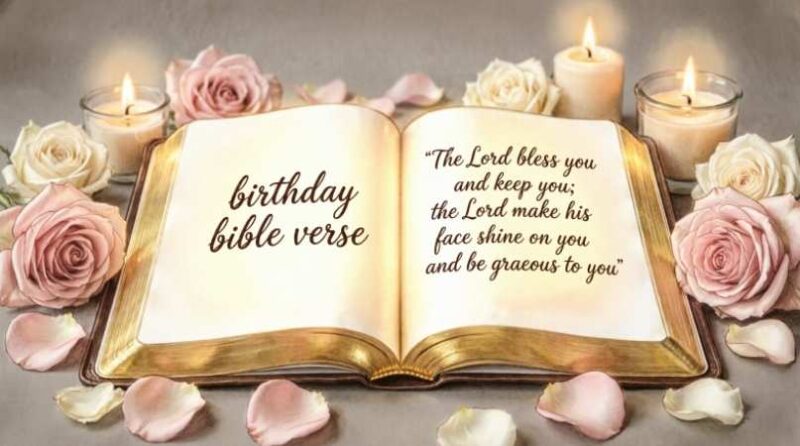
The best known blessing in scripture is the Priestly Blessing of Numbers 6:24 to 26: “The Lord bless you and keep you; the Lord make his face shine on you and be gracious to you; the Lord turn his face toward you and give you peace.” You can read the full passage at the USCCB. Priests have spoken it over congregations for millennia, and it still works as a send-off for someone you love.
- James 1:17: Every good and perfect gift comes from above, from the Father of lights who does not change.
- Philippians 4:19: God will meet all your needs according to the riches of His glory in Christ Jesus.
- Psalm 23:1: The Lord is my shepherd; I lack nothing.
- Romans 15:13: May the God of hope fill you with all joy and peace as you trust in Him.
- Ephesians 1:3: God has blessed us in the heavenly realms with every spiritual blessing in Christ.
- Jeremiah 17:7: Blessed is the one who trusts in the Lord, whose confidence is in Him.
- Luke 6:38: Give, and it will be given to you, a good measure, pressed down, shaken together, running over.
- Psalm 29:11: The Lord gives strength to His people; the Lord blesses His people with peace.
The Beatitudes: Blessings as a Way of Life
The Beatitudes in Matthew 5 are the most unexpected blessing list in scripture. Jesus does not bless the wealthy or the powerful. He blesses the poor in spirit, the mournful, the meek and the peacemakers. It inverts the ordinary definition of a blessed life, and it tells people in hardship that their suffering does not disqualify them from grace.
For blessings tied to a specific occasion, see the birthday blessings guide or the 240 morning greetings and blessings.
Blessings Across Different Religions
Blessing traditions are not a Christian invention. Every major faith has a form of them, and the shape they take says something about each tradition.
Christianity: Priests and pastors bless congregations, parents bless children, and believers ask God to bless food, homes and journeys. The Priestly Blessing and the Beatitudes are the most recognisable forms.
Judaism: The Hebrew berachah appears throughout the Torah. Jewish blessings often begin “Baruch Atah Adonai”, meaning “Blessed are You, Lord our God”, and cover everything from waking up to eating bread.
Islam: The phrase Barakallahu feek, “May God bless you”, is among the most common expressions in Muslim culture. Baraka, divine blessing, is associated with sacred places, holy days and righteous people.
Hinduism: Ashirvad, blessing from elders, is a deeply held tradition. Younger family members touch the feet of elders, who place their hands on the younger person’s head to confer it.
Buddhism: Buddhism does not centre on a personal God who grants blessings, but mangala, auspiciousness, plays a comparable role. Chanting, offerings and the presence of a teacher are all understood as conferring it.
What the Research Says About Feeling Blessed
Feeling blessed overlaps heavily with gratitude, and gratitude has been studied properly. Dr Robert Emmons of UC Davis has spent decades on it; his published work links regular gratitude practice to improved well-being, better sleep and stronger relationships.
On the brain side, the study people usually mean is Kini, Wong, McInnis, Gabana and Brown, “The effects of gratitude expression on neural activity”, published in NeuroImage in 2016. Participants who wrote gratitude letters showed greater medial prefrontal cortex activity in a task carried out three months later.
Two honest caveats, because this is the point where blessing articles usually overreach. These are modest studies with modest sample sizes, not proof that gratitude cures anything. And correlation with well-being is not the same as a causal claim about health outcomes. The research supports a real but bounded conclusion: deliberately noticing good things tends to help, somewhat, over time.
How to Give a Blessing
Most people wait for the perfect words and end up saying nothing. A blessing given imperfectly is worth more than a polished one you never send. Five steps, none of which require you to be eloquent.
- See the person. Think about what they are actually carrying before you say anything. Blessings that land are specific, and specificity shows the person they were seen.
- Name the goodness you want for them. Not “I hope things get better”, but “I hope you wake up tomorrow with more clarity than you had today.”
- Speak it directly. Out loud or in a voice note if you can. Written works too, but the spoken word carries differently.
- Mean it. A blessing is not a formality. If you are going through the motions, the other person will feel it.
- Let it go. Once given, you are not responsible for the outcome. The act has value on its own.
48 Blessings to Share
These are grouped by who you are speaking to. Change one detail in whichever you pick so it clearly belongs to that person.
Blessings for a Friend
- May your friendship come back to you a hundredfold.
- May every good thing you’ve done quietly find its way back to you.
- May you always have someone in your corner who really gets you.
- May today remind you that you’re more loved than you realise.
- May your laugh stay exactly as contagious as it is right now.
- May the kindness you give out never run dry, and may it always return to you.
- May you be surrounded by people who see your light even on your cloudy days.
- May every hard season you’ve walked through become a story that helps someone else.
Blessings for Family
- May your home always be a place where people feel safe enough to be themselves.
- May your family grow in love faster than it grows in years.
- May God bless the meals you share, the arguments you survive, and the memories you’re still making.
- May every family member find their way back to each other no matter the distance.
- May your children carry your best qualities and quietly leave the rest behind.
- May your family be proof that real love is still alive and well.
- May every generation in your family be kinder and more whole than the last.
Blessings for Someone Going Through Hard Times
- May this season end before it takes more than you can give.
- May you find something small today that reminds you it’s worth continuing.
- May you be held up by the people who love you on the days you can’t hold yourself up.
- May the peace you’re looking for find you, rather than the other way around.
- May this hardest chapter produce the deepest growth.
- May you not have to be okay right now, and may grace meet you exactly where you are.
- May what you’re carrying right now become lighter with each morning.
Morning Blessings
- May today bring you peace that doesn’t depend on your circumstances.
- May every door you knock on open, and every closed one lead you somewhere better.
- May you have the energy to do what matters and the wisdom to let go of what doesn’t.
- May God’s grace walk ahead of you today and cover every step.
- May today be proof that even ordinary days hold something worth finding.
- May your morning begin with stillness, your afternoon carry purpose, and your evening bring rest.
- May the worry you carried to bed last night feel lighter in this morning’s light.
- May you be kind to yourself today the way you’d be kind to someone you love.
- May your first thought today be one of hope, not fear.
- May you receive exactly what you need before you even think to ask.
- May this morning give you everything you need before you know you need it.
- Good morning, and may today be softer than yesterday.
- May you start this day with enough grace for yourself and enough left over for others.
- May your coffee be strong and your burdens be light today.
Blessings for Today
- May today hold at least one moment that makes you stop and feel grateful.
- May everything you pour out today be returned to you tonight.
- May today surprise you in a good way.
- May you move through today with ease and end it with peace.
- May you be healthy, peaceful and loved, and may every good thing you’ve given out quietly find its way back to you.
- May you notice one thing today that you would otherwise have walked straight past.
- May the thing you have been dreading turn out smaller than it looked.
- May you end today knowing it was not wasted.
For longer collections, see the 200 holy blessings prayers or the 95 short prayers for healing and recovery.
Frequently Asked Questions
What is the meaning of a blessing?
An intentional act of calling goodness, grace or protection over a person or situation. It can be religious or secular, spoken or written, formal or completely casual.
What is the difference between a blessing and a prayer?
A prayer is directed toward God. A blessing is directed toward a person or thing. Prayers ask; blessings declare. In practice the two overlap constantly.
Are blessings only for religious people?
No. The roots are religious, but the act of deliberately speaking goodness over someone is older and wider than any one tradition. Many people use blessings without any religious framing.
How do I count my blessings?
Name one specific good thing each day. Specificity matters more than length: “I have a warm bed” does more than a vague sense of gratitude. Emmons’s research suggests this modestly improves well-being over time.
What is a good blessing to say to anyone?
“May you be healthy, peaceful and loved, and may every good thing you’ve given out quietly find its way back to you.” It suits any occasion and any faith background, or none.
Does giving a blessing change the outcome?
Nothing on this page claims it does. What a blessing reliably does is tell someone they were thought of, and give the person speaking it a moment of deliberate goodwill. That is enough on its own.
Final Thoughts
A blessing is one of the plainer human things we do: stopping in the middle of an ordinary day to say that we want good for someone and mean it. Whether the words come from scripture or from you makes less difference than whether you actually send them.
Pick one from this page and send it to someone tonight. For more, browse the BlessingLite prayer collection or the blessings collection.
About this page: written and compiled by the BlessingLite editorial team. Scripture references are checked against published translations and research claims are linked to their original sources. If you spot an error, please tell us through our contact page so we can correct it.

Nova is a devoted faith-based writer and spiritual content creator with over 4 years of experience in crafting prayers, blessings, and uplifting inspirations. At BlessingLite.com, she combines her deep love for spirituality with a gift for heartfelt writing to help readers connect with their faith on a deeper level. Her work is rooted in the belief that simple, sincere words carry the power to heal, uplift, and transform lives. Whether you’re seeking morning blessings, prayers for difficult times, or words to share with someone you love, Nova’s writing is designed to touch your heart and strengthen your spirit.